Sunday, March 6, 2016

How "Marooned" Made Me Love Legends of Tomorrow


How did this become my new favorite show? (Besides Agent Carter, of course.)

I didn't start watching this expecting to love it. I started watching it because Rory, I mean Arthur Darvill, is a Time Lord, I mean Time Master, piloting a TARDIS, I mean Wave Rider, through time and space. With EIGHT companions along for the ride. Essentially I think I was just going through Doctor Who withdrawal (no new episodes until Christmas - urgh), so this was the "diet Doctor Who" I could sate myself with until then.

I wasn't all that impressed with the pilot. It was just a big ol' exposition dump, with too much arguing between the alleged "legends" and not enough action/plot. 

But...I decided to give it another chance.

And you know what? It got better. Not to say the episodes didn't still have their flaws, but each episode was a little better than the last. And some of the characters started to grow on me - oddly enough, Captain Cold, whose snark, intelligence, and complexity completely made up for the ridiculous name; White Canary, fearless and fun-loving, and a stone-cold badass; and even, at moments, Rip Hunter, mainly because Darvill's acting is beautiful, as usual.

Through the next few episodes, the Legends carried out a bank heist, a rescue from a Russian gulag, a battle in future Star City...and then came "Marooned."


This episode reminds me a little of Firefly's phenomenal episode "Out of Gas." With all the Star Wars and Star Trek references in it, I wouldn't have been surprised if they'd dropped a Firefly reference!

But seriously, guys: I love this episode. I. Love. It.

First off, every single member of the cast has something to do, which is awesome! One of the show's problems has been, inevitably, the size of its cast; it's hard to come up with a story every week where every single Legend is needed. The writers have manufactured sub-plots for when some of the characters have to take a backseat; some of them worked (Snart going back to talk to his childhood self comes to mind; great acting from Wentworth Miller), but most of them feel a little clunky. Here, though, that is (mostly) not the case:

RIP

Here we get some important back story on Rip's conflict with the Time Masters and his love story with his wife Miranda. Though probably the weakest part of the episode (for some reason, Darvill and Alex Duncan just didn't seem to have the right chemistry), it finally gave us a glimpse of how deeply Rip is grieving and how desperate he is to save his family. The opening also captured that desperation very effectively, with Rip obsessively re-watching a holographic message his wife and son left him before their untimely deaths. 

I think this can explain why he blundered straight into a trap on the other ship; he's so desperate he's just not thinking straight.

STEIN

Woo! Stein found his inner badass! Played by the delightful Victor Garber, I think one of the best parts of the episode was when Stein took out that pirate and stole his beret, lol.

I also loved the little tidbit of a back story that we got from Stein's childhood. It's nice to see him having fun. Space Ranger Stein, indeed! 

JAX

Okay, so the other half of Firestorm didn't get to do as much. But I loved his reaction to Stein's awesome entrance, and also getting in between Rip and Rory when they're arguing shows he's got guts. He did try to break them out, and at least on this mission he wasn't kidnapped or left behind on the ship!

SARA

I frikkin' love Sara. Seriously, she is such a badass. Caity Lotz is a trained martial artist, so she does all her own stunts and fight sequences. I love whenever Sara gets to kick ass, because it always looks amazing; I love that I can watch and believe that she is beating the crap out of six guys at once.

What I also love is her sense of fun. Because she is such a great fighter, following TV trope #203, she should be the cold b*tch - but she's not. She's really up for anything, whether that's kicking butt or partying at a bar (and then kicking butt right after). She's faced death, so what is there left to be afraid of? 

The interesting part of that is, what she really has to fear is herself. Sara has her dark side, a bloodlust left from being raised from the Lazarus pit. Seeing her struggle to keep that bloodlust under control shows some great acting on Lotz's part. Sara's struggle also shows how strong she is, and the fact that she tries so hard to keep it together to help the team just makes me admire her all the more.

Regarding other skills, she can also keep up with Snart's level of snark, which I frikkin' love. Which brings me to:

SNART

Holy crap, I love this actor. I'd never heard of Wentworth Miller before this show; I've never seen Prison Break, I haven't watched Arrow or The Flash yet, I just stumbled in to Legends not knowing what to expect. And I got this sneering, snarky, sarcastic, wonderfully over-the-top yet just-understated-enough performance for his portrayal of Captain Cold. And I love it.

It's sometimes hard to know how to play a character in a comic book show, because the plots and characters can be so completely out there and insane, but they still have to be relatable on some level. Miller, I think, manages to strike the perfect balance between sneering comic book anti-hero and real, believable human being. His portrayal is easily one of the most enjoyable things about the show, and the fact that Snart's also probably the most complex character makes it even better.

Within seven episodes, Captain Cold has changed as a character - whereas before he cared only about himself, his partner, and his sister, his circle is now opening up to include the Legends. Snart's found his heart, and the subtlety of Miller's performance within that arc is what really sold me on that piece of character development. I guess I'm just a sucker for a good redemption arc. 

Which also plays into what I'm going to mention next, for better or for worse:
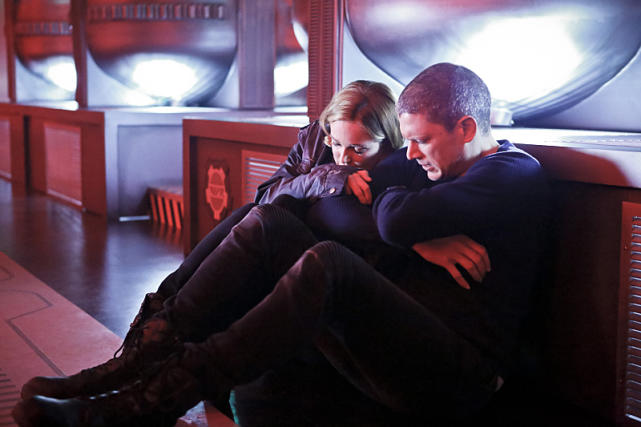
Sara/Snart...otherwise known as #CaptainCanary

I ship it, okay? I ship it, ship it, ship it. Some actors just work really well together, and Wentworth Miller and Caity Lotz have some frikkin' great chemistry. 

Snart and Sara were definitely my favorite characters from the get-go; they've been fleshed out the most in regards to character development, and both are seeking redemption in their own way - Sara from her killer's instinct, Snart from his own selfishness and criminal ways. My thinking is, this character is awesome, and this character is awesome...wouldn't they be really awesome together?

What cemented it for me was "Fail-Safe," when Snart stopped Sara from killing Stein. That was just so...un-Snart-like, I knew something big had changed. I think Snart does have feelings for Sara; I'm not sure he's ready to admit to himself what they are. But we can see that he's changed, and, well - love'll do that. I'm just saying. 

I'm not sure what Sara's feelings are yet. She and Snart certainly seem to get along the best out of all the Legends, whether that's starting a bar fight or, in this case, playing cards. Oh, and confiding in each other while nearly freezing to death. (I absolutely did not squeal when we saw Snart had given Sara his jacket to keep warm. Nope. Not at all.)

We'll see where the writers take it; personally, I can't stand to see good chemistry wasted. If they're setting up a Snart/Sara romance, I'm all for it. It can take awhile for all I care, as long as we get the payoff....And if it doesn't happen, I'll just be over here quietly shipping it anyway.

Character-wise, in finding he cares about the team, Snart's less inclined to act like the brutal, unfeeling criminal he was. Unfortunately, Rory doesn't understand this change, which leads us to the most tragic conflict of the episode:

RORY

It was genius to cast Heatwave and Captain Cold with the two actors who played brothers on Prison Break. Miller and Dominic Purcell brought that brotherly bond to Snart and Rory, which made the ending of this episode even more tragic.

Rory isn't my favorite character, but I do like him (really, if there was a show with just Snart, Rory, and Sara, I'd watch the heck out of it). He's a great contrast to Snart, which makes this conflict feel inevitable, with Snart growing and changing while Rory still just wants to burn and kill and steal. Rory's one good trait is his loyalty to Snart; that was emphasized by Snart's story about Rory saving him when he was jumped by the other kids in juvie. So we can understand Rory's sense of betrayal when Snart no longer sides with Rory's criminal inclinations.

Add on top of that Rip's insults, spewed from the depths of his desperate frustration, and Rory is done with the Legends. He may not be as smart as Snart, but he's still a very dangerous threat - now one that has to be taken care of.

The final scene of this episode is just heartbreaking. You can feel Rory's hurt and anger as Snart aims his gun at him. Wentworth Miller frikkin' got me in this scene; that anguish on his face was enough to make me start tearing up. Who would have thought that this show would make me cry? Freakin' Wentworth Miller - this scene is a stab to the gut, and the tears in Snart's eyes just make it all the more heart-wrenching.

In the end, though, did Snart kill Rory? I don't think so. That line - "Only one of us is walking out of here alive" - has me thinking maybe he froze his legs to the ground or something (if that's the case, nice one, writers). Really, though, it doesn't even matter if he let him live - the betrayal's been made, and I don't think it's one Rory will ever forgive Snart for.

Other sub-plots:
RAY

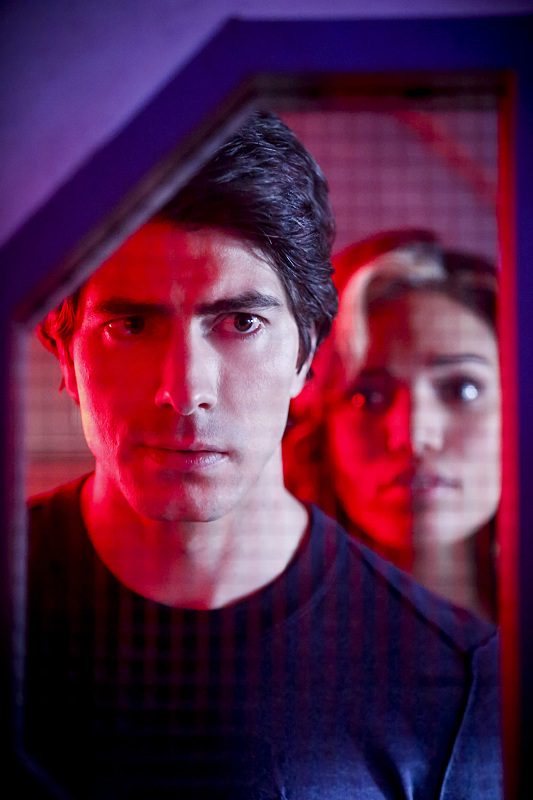
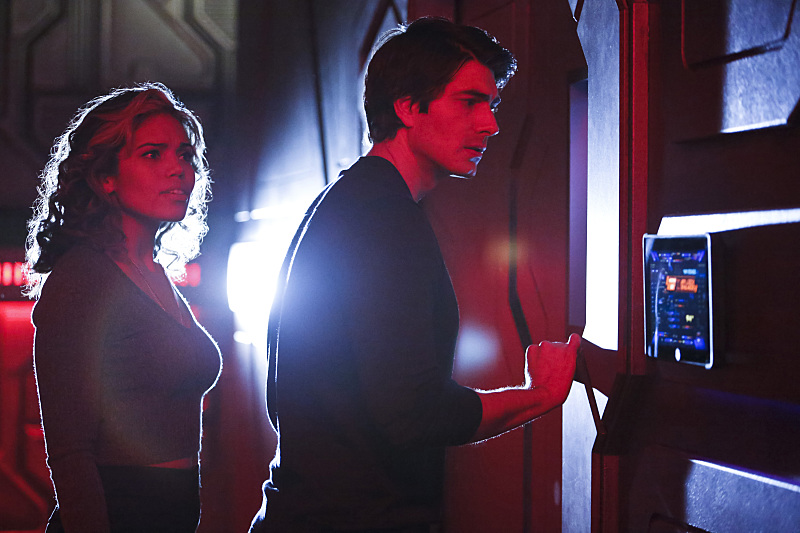
While the other Legends are experiencing a lot of doom and gloom, Ray, meanwhile, is his usual adorkable ray of sunshine; Brandon Routh has awkward charm down to a science. He goes out in the Atom suit to repair the hole in the ship, and we get a nice exchange between him and Kendra - before he, you know, nearly dies. 

While this is probably the second-weakest sub-plot, it did give us a scene where Ray's character was rounded out a little more. We don't always get to see much of him when the other Legends are experiencing their share of drama, so it was nice to see him get a bit more screen time.
KENDRA

Oh, Kendra; someday you'll get your own story line.

I've been waiting for Kendra to quit moping in the shadows and start being a frikkin' Legend. This episode she got to do some actual ass-kicking - woo! Finally!

I don't know if I'm 100% behind the whole Ray/Kendra thing - for one thing, it's going to be super awkward when Carter comes back (although that can be as far in the future as the writers want it to be, he was by far the worst actor on the show). But hey, why not - if this is what gives her more screen time, maybe that will lead to a plot line that doesn't involve a potential love interest.

Overall:

This episode was just pure fun, with a huge smack of heartbreak at the very end. It also had a ton of Star Wars and Star Trek references. Some people may have thought it was a bit much; I, however, was enjoying myself too much to care. The time pirates, while maybe not the most well established villains, were the necessary vehicle to get this story rolling, and once it did - wow! We learned so much about Rip, Sara, Snart, and Rory, as well as getting to watch Stein immensely enjoy kicking some butt. Throw in some fantastic fight sequences, DC Comics references as secret commands for Gideon to fly the ship (nice one, Rip), a scene that showcased the exceptional chemistry between Sara and Snart, and no Vandal Savage - this episode was all I ever wanted from Legends of Tomorrow. 

And now I'm in it for the long haul. Kudos to you, LoT Writers Room; I'm hooked!

Thursday, March 3, 2016

5 Reasons Why Agent Carter Absolutely Needs a Season 3


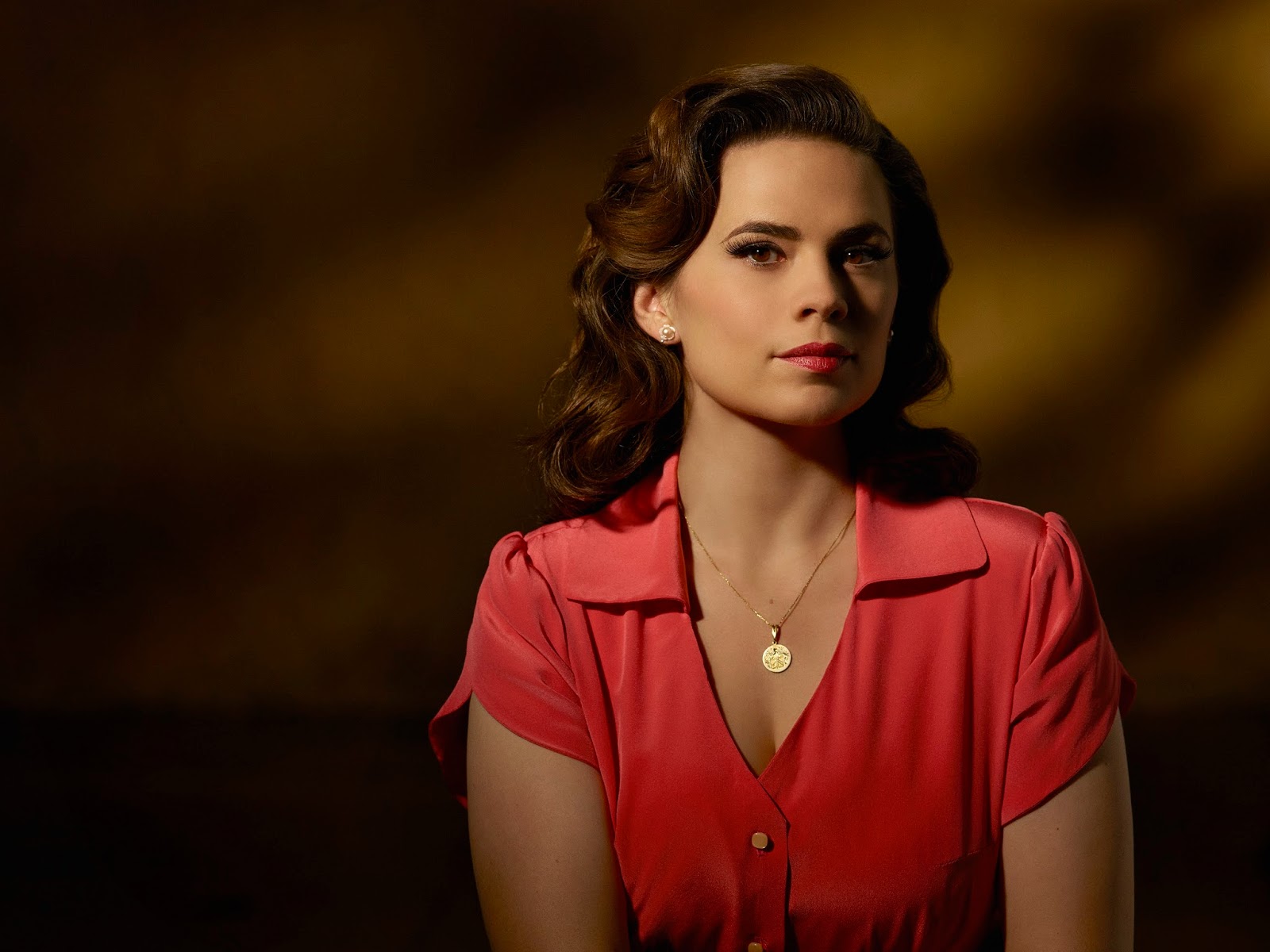
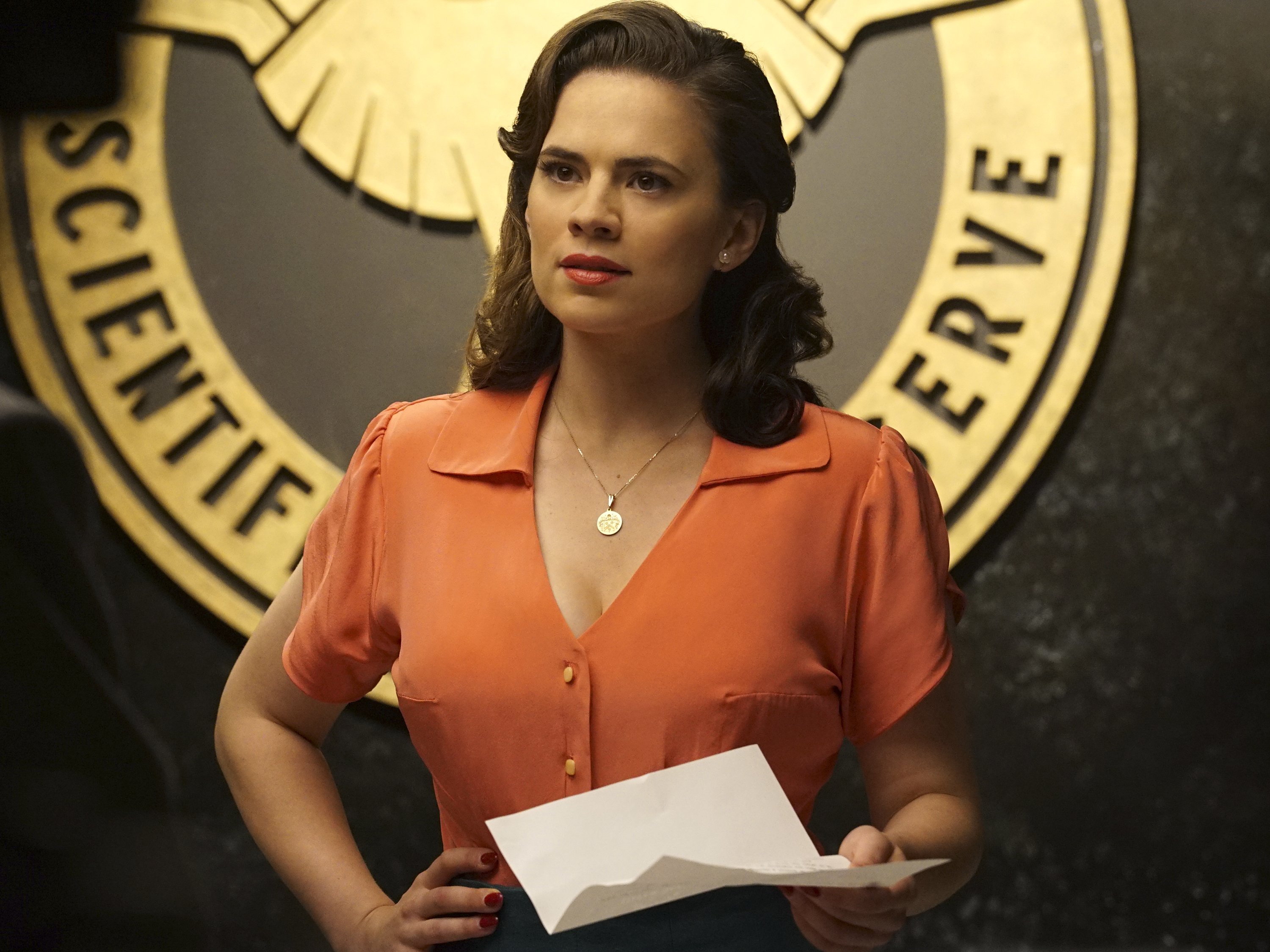
What you are looking at above is one of the most badass women in the Marvel universe, and possibly one of the best female characters on television right now. Her name is Agent Peggy Carter, and she is wonderful, in every sense of the word.

You've seen me mention the show Agent Carter before, and there's a good reason I'm bringing it up again: because it needs to be renewed, and here are a few reasons why:


1) Peggy herself

The way the writers have crafted this character is phenomenal, and Hayley Atwell does a magnificent job playing this amazing woman. Peggy Carter is tough, intelligent, charming, witty, charismatic, and compassionate, a true leader who people rally around, because she inspires trust and compassion - she's an inspiration, period. Even her doubters, who initially scoff at her because of her gender, end up trusting her with their lives, and she never lets them down. 

She's a genuinely complex character, and it's fantastic to see a woman portrayed on screen who feels real. She's tough, but never cold; she's kind, but never weak. Even in her moments of potential weakness (which she has, because she is actually a multi-dimensional, complicated character), she has her friends to help her through, and Jarvis, Sousa, Rose, etc., would all follow her to the end of the line, and we as an audience can see why. Seeing a woman in a leadership position where she is so obviously in her element is awe-inspiring, and I would love to see more characters like her, both in the Marvel universe and in television/films in general.

Peggy Carter, ladies and gentlemen. If you don't love her, you are wrong.


2) Its uniqueness as a show

There's no doubt about it, there is no other show on television like Agent Carter. Its status as a period piece gives it a unique chance to give us a delightful run through the late 1940's, with fantastic costume design, classic cars, and nostalgic settings like a New York Automat; with its comic book roots, it's also able to have a little fun along the way.

While Season 1 was a bit more focused on drama, Season 2 lightened the tone considerably, bringing out the best comedy we've seen yet from the writers and actors, particularly James D'Arcy (as Edwin Jarvis). With the show settling comfortably into that vein of lightheartedness (for the majority of the season, anyway), we got some memorable sequences that cemented the kind of playfulness that I think can be seen as the show's signature: action sequences set to 1940's songs, Peggy's dream sequence with its homage to old Hollywood musicals, etc. 

You won't see anything like this on any other show, and the fact that Agent Carter can pull it off is a testament to its awesomeness, and the clarity and focus of its showrunners' vision.


3) Its perfect cast

We've already mentioned the magnificence that is Hayley Atwell. Do you know who else is fantastic? James D'Arcy as Edwin Jarvis - Peggy's loyal driver, best friend, surprise badass, and incredibly hilarious comic relief. I love the bond between Peggy and Jarvis - they truly would do anything for each other. Their friendship is the heart of the show; the fact that it started with Peggy punching him across the face now seems more than a little amusing.

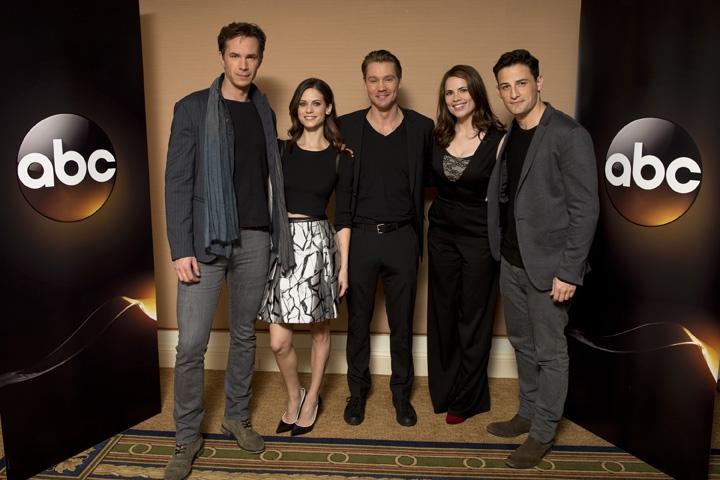
I could spend all day describing these awesome actors - Enver Gjokaj as Daniel Sousa, I love him to death, he is a fantastic actor, and perfect for this role; Chad Michael Murray - even when Thompson is an a-hole, you still feel like there's more to him than he shows, and there is; Dominic Cooper as Howard Stark, one of the great comedic highlights of any episode; and Wynn Everett as Whitney Frost - I mean wow, she knocked it out of the park; this is one scary-as-heck villain, but complex as well.

On top of it all, the actors all seem to genuinely enjoy working together and being on Agent Carter; it would be a crime to split up such a perfect cast, whose enthusiasm and love for the show they're in shines through in their amazing performances.


4) Potential story lines

Season 2 is way too soon to stop the show; there's just so many more story lines it could explore. This is the woman who founds SHIELD; wouldn't it be great to actually get to the point where we see her create it?

This works on the period drama side of things, too; how cool would it be to see the show move through the 50's, maybe even the early 60's, and watch how the stories evolve with the changing times? Season 1 dealt with the aftermath of World War II, Season 2 with the Red Scare and the beginnings of nuclear warfare - what other parts of history could be worked into the narrative?

Whatever the writers have planned for Season 3 (and they apparently do have something planned, we just need to get there), this show has so much more mileage in it, it would be a shame to cut it off when it's just found its niche.


5) THAT CLIFFHANGER

Even with cancellation looming on the horizon, the writers still ended the season on a cliffhanger. I really admire their optimism - but seriously, what the heck?? The key? Peggy's file?! Thompson??! If this show gets cancelled, we will never know the answer to these questions. And, according to the show runners Tara Butters and Michele Fazekas, apparently it's something pretty great. GAH.


So, what can we do to save the show? Here are a couple things ABC has said we can do to get their attention:

-Re-watch the episodes! Even if you just have Hulu running in the background while you do other stuff on your laptop, ABC keeps track of online views, so the more views Agent Carter gets, the better!

-Tell ABC! Use the link below to tell ABC what you love about the show and that they should renew it. Through the link, you can email them, or you can call them and leave a message. Both of these take less than 30 seconds to do - I both emailed and called them, and you can, too!

-Tweet/Facebook about it! Use Twitter and Facebook to get the message out #RenewAgentCarter

It's a complete shame such a wonderful show is facing cancellation, and we need to do something about it. Talk about it on social media, blog about it, join forces with your friends and/or fellow Agent Carter fans to blitz comment sections of articles about the show, like Agent Carter's Facebook page, etc. - if we're loud enough, we can make our voices heard! Let's "do as Peggy says" - #RenewAgentCarter!

Sunday, January 24, 2016

Sherlock: The Abominable Bride and What It Means for Season 4


Well, it's been confirmed: filming for Season 4 starts in April 2016, and we'll have it on our televisions by January 2017. I'll not deny it, that's a lot of waiting, but at least we got a Christmas(ish) special to sate us while we wait. (Note: *SPOILERS AHEAD*)

And what a Christmas special it was! Completely and utterly insane, but so entertaining, and it gave us so many wonderful things:

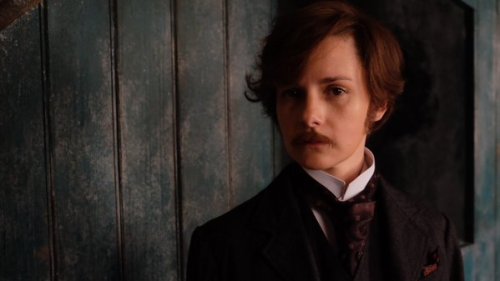
Doctor Hooper! Molly rocks the mustache better than John, lol
Fat Mycroft! Good lord, lol
Spy Mary! I'm so glad they kept her back story
Mrs. Hudson and her protest of silence against her not speaking in the stories, lol
"Give her some lines, she's perfectly capable of starving us!"
And sight gags like this:

Speedwell's! In Internet speak: "Aw yiss!"
And of course, the ultimate reveal (or, one of them):

"Miss me?"
So, what did I think of the special? Well, let's talk about three things:

The MESSAGE: So, to my surprise (and I'm pretty sure everyone watching), this special ended up being about feminism.

As a feminist myself, I can't say that I found myself against the notion when I realized what the episode was truly about. I was just a bit taken aback, since I don't think any Sherlock episode before has really had a message. Was this a bold move or a potentially damaging one? (I suppose that question really sums up all the choices made for this episode!)

I confess I was a bit unsure of the execution when the camera lingered on Mary after Holmes and Watson went dashing out to solve another case. Is this whole episode going to be her complaining about how unfair it is for women in this time period?, I wondered. I mean, it certainly was unfair, but that wasn't what I'd come to watch.

But then Mary receives the message from Mycroft, and we discover a fantastic thing: that in this story line she's still a spy, and she, too, dashes off to solve the Abominable Bride case. I personally love this addition to the show's canon; I even sort of wish it was part of the Conan Doyle stories. Mary Watson is so rarely in said stories, and is so casually killed off, perhaps now we can say her many absences were because she was on spy missions, and her death must have happened in the field, so its true circumstances had to be hidden from Watson. I'll definitely keep that head canon, as it's so much better than what we have.

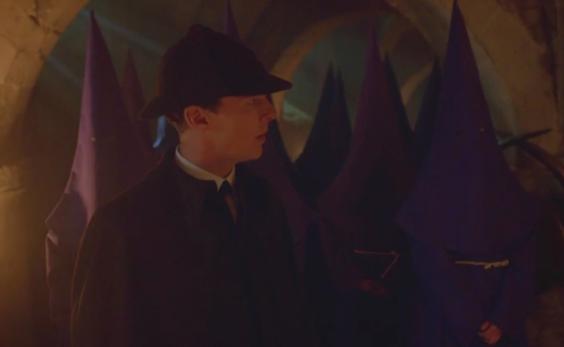
Through the mystery of the Abominable Bride, we are ultimately led to the secret society behind it, what Watson temporarily labels the League of Furies:


How to describe this scene? It's not offensive, at least not intentionally. I mean, the hoods were probably a poor choice, especially when you're trying to portray these women in a positive light, but I think the costumes were supposed to be purely for effect, not necessarily as part of their portrayal as women - as Moriarty says, "Is this crazy enough for you? Gothic enough?" The hoods were simply to invoke the mood of a classic Conan Doyle mystery, of shadowed halls and secret cults and mysteries stranger than our imaginings. So, I wasn't offended; I can see why other people might be, but I don't think that was ultimately the intent.

Then why was I still uncomfortable watching this?

After thinking about it, I realized it wasn't the message that was making me uncomfortable; it was the execution of said message. Because this speech is so heavy-handed, so smack-you-across-the-face, just not subtle at all.

I'm uncomfortable because it's bad screenwriting.

The whole episode stops in its tracks just for Sherlock to explain to us exactly what we're supposed to take away from this episode. There's no subtlety, no nuance, nothing for us to figure out for ourselves - no, it's just words, words, words. Ugh.

Up to this point, I really liked how the portrayal of the women of the Sherlock universe had been handled: Molly disguising herself as a man to be taken seriously in what's seen as a man's profession; Mary getting out from underneath John's condescension to solve cases and mysteries for the British government; Mrs. Hudson protesting her character's silence, because so many women are often ignored and made to think their words and opinions don't matter; and Lady Carmichael and her fellow Brides, taking up arms against a world that tells them they are lesser, that their suffering doesn't matter, that verbal and emotional abuse is their lot in life. I see all these women, and I understand them; perhaps murder is a bit much, but I understand the emotions behind it.

We don't need Sherlock Holmes to explain that to us.

It's interesting, actually, how Sherlock is portrayed as a feminist in this version, while in contrast John is portrayed as a misogynist (and pretty much any other -ist in the book). Sherlock sees Lady Carmichael as an intelligent and discerning individual, and says so. While he says it to spite her husband, it has a genuine ring to it, and that genuine respect holds true when he comes across the society of Brides. He understands their motives, their anger, their resentment, and thus their rebellion (he just explains it in a few too many words). 

Intriguingly, it seems that his feelings cross over to the modern universe, as we see Molly and Janine as two of the vengeful Brides, and also flashes of them from His Last Vow. I think we're supposed to conclude that Dr. Hooper's surprising hostility arises from Sherlock remembering Molly's anger at him for taking drugs, and knowing she would be angrier still if she knew he was on drugs now. Sherlock's guilt over deceiving Janine shows when her Bride self speaks of men betraying women and treating them badly. He knows he is one of those men, and so, in this drugged-up mess of a mind palace, he is condemning himself.

This crossing-over into the modern day story line leads us to our second important aspect:

OVERLAPPING UNIVERSES:

What do you think? Too much overlap? Just enough? Is it entertaining? Obnoxious? Clever? Too clever?

The mind palace is a narrative device introduced in Season 2 in The Hounds of Baskerville, and was featured prominently throughout Season 3, especially in His Last Vow. In this episode we see it as the story's ultimate framing device, as it's left vague as to whether modern Sherlock is creating his Victorian era persona via the mind palace and a pretty heavy drug cocktail, or Victorian era Sherlock is dreaming up modern Sherlock through a heavy dose of cocaine. To be honest, I love the ambiguity; the last shot especially is wonderful in showing the the two dimensions side by side and that Sherlock Holmes, no matter what century he's in, is always "a man out of his time."

What bothered me about the mind palace, though, is that it may have taken away from a perfectly good mystery. It's around the hour-mark that Holmes discovers the society of Brides, and in that we have our mystery solved. I don't know about you, but I've missed having good mysteries in Sherlock; Season 3 was good, but it didn't really have any great cases except for His Last Vow, and even that was more about Sherlock's own flaws and shortcomings than it was about the case itself. In The Abominable Bride, we actually got a pretty intriguing mystery, and to see it solved in the end was immensely satisfying. There was just one hang-up: Lady Carmichael. Why did she hire Holmes to uncover the society she herself was a part of? It's at this point that the mind palace really comes into play (and the last half hour of the special is completely crazy because of it), but I couldn't help feeling it took away from the satisfaction of a good resolution.

If we actually got a good mystery out of the mix, I think I might have been fine with just an hour-long special; they could have come up with a reason for Lady Carmichael to bait Sherlock Holmes. Maybe she wanted to see if he could figure it out, as a test; if he couldn't, they were safe from anyone else who would try to uncover them. If he could, then maybe they could ask him to join them, or at least help their cause. I don't know; I just know the mind palace part of it didn't feel strictly necessary.


Don't get me wrong; I love Andrew Scott as Jim Moriarty. I'm glad they were able to bring him back because he is just perfection as the off-kilter Jim. But in speaking of the story in general, I'm not sure the mind palace was really beneficial to it. 

The mind palace is a clever idea, and it definitely gives Sherlock as a show a unique look and feel. But the mind palace is only meant as a narrative tool; when it becomes the whole of the narrative structure, the show becomes purely style over substance...which brings me to what I'm worried about for Season 4.

SEASON 4:

At the end of The Abominable Bride, Sherlock announces that Moriarty is definitely dead, and he knows exactly what he's going to do next. All the rest of the characters, understandably, react to his statement like this: ???

So, is Moriarty dead or not? Did this special give us an answer? Well, I believe it did, so here's my interpretation of Moffat and Gatiss' hijinks:

The Abominable Bride started out as just one person, Emelia Ricoletti. When she died, her friends took her place - really, anyone could be the Bride, as shown by Janine and Molly dressing up as her to scare Lord Carmichael and to distract Holmes and Watson while Lady Carmichael killed her husband. 

How it ties into Moriarty is this: Moriarty is dead. However, other villains can still use his image to intimidate and to distract Sherlock and John from whatever's really going on. Like the Bride, Moriarty's identity can be taken on by anyone - including whoever's responsible for the image of his face flashing up on every screen in England. 

Of course, I may be wrong; you never know what insanity Moffat is going to pull out of his sleeve, and we've still got a good two or three months before filming starts for him to dream up a new interpretation of what's really going on. But I do think this theory makes the most sense in regards to the special. Even if Moriarty is dead, they can still bring Andrew Scott back via the mind palace, which I think is part of the reason why they're using it more and more.

BACK TO REALITYYYYY
My fear for Season 4 is that it will be more of Season 3. Not that Season 3 was bad, but it was nowhere near the kind of quality Seasons 1 and 2 were. Moffat and Gatiss are focusing less and less on good stories and more and more on the characters. It's not like they're bad characters, either; it's just that the stories need to be used as a vehicle to expand on those characters, not the other way around. The characters themselves don't have the chance to shine or evolve when the narrative around them is weak. To be fair, the show has gone through a lot of the more well-known Conan Doyle stories, but still, isn't adapting material what you're good at, "Mofftiss"? There are still so many stories left, surely you can find a way to create a good story out of some of the most entertaining mysteries ever written?

To be perfectly honest, even with its flaws, The Abominable Bride is a genuinely good piece of entertainment; I've watched it three times, and I know I'll watch it again. Its dialogue is well written, its characters are awesome, it has more than a few hilarious moments as well as some genuinely creepy scenes with the Bride, the mind palace is insane but enjoyable stuff, and all the Conan Doyle references really are a treat for anyone familiar with the stories. It just needed a bit more focus to be on par with the likes of A Scandal in Belgravia, A Study in Pink, The Reichenbach Fall, etc.

I hope Moffat and Gatiss realize what they need to work on and fix it, then take what they're good at already and wrap it all up in a good mystery. That's what we need for Season 4, and I can't wait to see what's in store for us when it does eventually come around.

January 2017 - we've waited this long, we can make it!

Thursday, December 10, 2015

Doctor Who Season 9 So Far: Episodes 10, 11, and 12

Thoughts on Face the Raven, Heaven Sent, and Hell Bent


Well, here we are at the end - and what a fantastic season it's been! I know I was pleased (for the most part) with Season 8, but this season just completely knocked it out of the park. Season 8 was the warm-up - this was the real thing, the Doctor Who that I've missed for awhile now. 

Season 4 still reigns supreme as my favorite season of New Who, but this season gave it a run for its money, with Davros, Missy, ghosts, the Fisher King, Vikings, an immortal, Zygons, Sandmen (...okay, maybe not that last one), a quantum shade, the Veil, and last but certainly not least, THE TIME LORDS AND GALLIFREY (I can't believe I called it, I was hoping we'd end up there, and then we frikkin' did!!). 

On top of it all, we had to say goodbye to a companion, Clara Oswald, who has been with us since Season 7. The last few episodes of a season are always emotional, and this was no exception. I actually cried at all three of them. Three episodes in a row; I don't know if I've ever done that for a show before. When you combine great writing and great acting and great directing, you can hit people right in the heart, and that's what these episodes did for me. No time to waste (although Eleven would beg to differ, since time is not the boss of you) - let's get right to them!


Episode 10: Face the Raven

Here we have our second episode this season from a female writer, Sarah Dollard. And my kudos to you, Ms. Dollard, because you nailed it. This episode is beautiful.

First of all, I love the idea of the trap street; if you've ever been in London, it does have all sorts of side streets that crop up everywhere, so it's even somewhat plausible that an alien camp could be hidden somewhere in London. The concept of a refugee camp is interesting, too, particularly with how much damage the Doctor and his various conflicts with alien species create - we're seeing the victims left behind, and ones not of this world at that. 

After spending a little too long looking for the trap street (that's my only real complaint about this episode), we finally find it - and who should be the head of the camp but Me, with a fresh new threat tattooed black around her neck: a chronolock, linked to a quantum shade in the form of a raven. This whole idea of a raven bringing death is very Gothic, and the atmosphere of this episode is saturated with that mix of darkness and thrill. The close streets feel claustrophobic, the threat of the raven looms, we have enemy aliens living in close quarters with only the light from the glowworms protecting their identity (another really clever idea, combining Gothic and sci fi elements wonderfully), and a murder mystery to solve before time runs out. Oh, heck yes.

And then, of course, the name of the episode comes into play in the most tragic way possible.

Clara has been set up since Season 8 to want to be the Doctor. Though Flatline was a major indication, or perhaps fanned the flame, of this desire, Season 9 is when it became most obvious in her character arc. She wants to be as smart, as capable, she wants control of every situation just like he has, and to be able to fix things like he does. Over time, as she's spent more time in the TARDIS, she's grown more confident, until she's giving orders to UNIT and standing up to the Mire. That's all fine and good - great, even - until that confidence turns to arrogance.

I think I can say that most of us didn't expect Clara's death to be like this. I mean, she's the Impossible Girl - shouldn't her death be the consequence of something earth-shattering, saving the universe or some such bombast? Most companions get a huge send-off, like the Battle of Canary Wharf for Rose, or the Master taking over the Earth for Martha. But here, it's on a much smaller scale. 

Maybe that's the point - I mean, you can't get much bigger than splintering yourself across the Doctor's entire timeline in order to save him. Maybe Steven Moffat realized that, and decided to go a bit more subtle, a bit more intimate. Whatever the thought process, I sincerely approve of it. This was not how I thought she would go, but it ended up being perfect.

Clara's Achilles' heel is her arrogance - she wants to be the Doctor, but she can't. Her trying to be the Doctor, to be clever and take control and try to be three steps ahead of everyone else, ends up being her doom, and that is why her end is perfect - because it feels inevitable. One way or another, we would have ended up here eventually.

The showstopper of this episode is, obviously, Clara's goodbye. I couldn't help feeling incredibly proud of her. She doesn't try to run, or deny anything; she accepts the situation, and does everything right - assuaging Rigsy's guilt, protecting Me, and consoling the Doctor, who for once feels completely powerless. This scene is so well written, and so well acted, by both Jenna Coleman and Peter Capaldi. Clara knows the rage the Doctor is capable of, and so she lets him know that she won't accept his grief as an excuse to hurt anyone: 

Clara: "You're going to be alone now. And you're very bad at that. You're going to be furious, and you're going to be sad. But listen to me: don't let this change you...You can't let this turn you into a monster. So I'm not asking you for a promise. I'm giving you an order. You will not insult my memory. There will be no revenge. I will die, and no one else here, or anywhere, will suffer."

And then the Doctor whispers, "Clara-", his voice cracking, and that is when I started crying.

You can feel the pain in this conversation; they never have to say it, but you know Clara and the Doctor love each other. The Doctor would tear the skies apart for Clara, and that is why she knows she needs to tell him not to when she dies. This lingering goodbye is one of the saddest scenes we've had in a long time, made even sadder by the fact that, even though she forbids him to, the Doctor watches as the raven claims Clara's life. Doctor, why do you do that to yourself?

Because he blames himself. And that is also one of the saddest parts of being the Doctor.

I can't say much else except, what a send-off. Last year's Christmas episode, Last Christmas, was supposed to be Clara's goodbye, and it was perfect - and then Coleman changed her mind to come back, so Moffat had to rewrite the episode at the last minute. I wasn't altogether sure if they would be able to match the quality of that beautifully sad departure, but I think they have with this. Again, my kudos to you, Sarah Dollard; I look forward to anything you write for Doctor Who in the future!

Notable Quotes:

[Clara and the Doctor meeting Rigsy's baby girl]
Doctor; (to Rigsy) "Did you make this human?"
Clara: "Oh, Rigsy, she's gorgeous."
Doctor: "She's better than that - she's brilliant!"

Doctor: "Bring the new human. No, don't bring the new human. I'll just get distracted." 
Who would have thought - even Twelve loves babies!

Clara: "Well, if Danny Pink can do it, so can I."
Doctor: "Do what?"
Clara: "Die right. Die like I mean it. Face the raven."
Doctor: "No, this is not- This can't be happening."
Clara: "Maybe this is what I wanted. Maybe this is it. Maybe this is why I kept running. Maybe this is why I kept taking all those stupid risks, kept pushing it."
An interesting look into Clara's psychology - a self-destructive urge, created by her grief over Danny and encouraged by her desire to be the Doctor. For all of Clara's bravado, she has been slowly, silently spinning out of control, and it kind of makes me sad that her friendship with the Doctor seemed to do her more harm than good. I think the problem was they were too much alike; two Doctors is always cause for trouble, and this was no exception.


Episode 11: Heaven Sent

Oh, my god. I have no other words. Just oh, my god.

This episode is spectacular. 

Really, just magnificent. Peter Capaldi holds us captivated for a solid 45 minutes, and it's one of the best things I've ever seen on television. This is Twelve's finest hour, hands down. This will go down in Who history as one of, if not the best episode Twelve has ever had. Because it's amazing. Writing by Steven Moffat, acting by Peter Capaldi, directing by Rachel Talalay - all just amazing.

The funny thing is, the story isn't even that original. It's been done before, with all its Gothic-y, mind-bending awesomeness. But the execution is that fantastic - you're confused for forty minutes and then completely blown away in the last five. I love television that makes me think, that makes my brain feel like electricity is scorching through it when I'm figuring something out (I am a Ravenclaw, after all), and - well, there's a reason we say "mind blown"; it literally felt like my brain was imploding when the twist was revealed. After an eternity of feeling confused, suddenly everything made sense, and IT. WAS. AWESOME.

Just like the Doctor, we're dropped into a place where we have no idea where we are, what's going on, or who the immediate threat is. Like the Doctor, we're still grieving over Clara, and want to find whoever's responsible for her death. And like the Doctor, we slowly figure out what's going on, piece by carefully laid piece.

Within that strange puzzlebox of madness, Twelve finally has a proper monster: the Veil.


Death personified, it hunts the Doctor from the get go, stalking him, accepting confessions as payment until it comes back around, until the Doctor must give up his life when he runs out of hidden truths to tell. This is a haunting presence, preceded by the sound of buzzing flies - a graphic combination of sound and imagery that makes this monster even creepier, if that was even possible.

What's really great about this set-up is that we see the clues from the start. At the very beginning, during that amazing monologue, we see the bloody footprints, someone pulling the lever, the hand burning to dust. But we don't know, we don't understand the weight of what we're seeing, until the very end, when it hits all at once, straight to the gut.

I won't tell you how much I cried during this episode. I won't, because I would probably be too embarrassed by it. It was during the montage at the very end, when everything comes to light, everything comes together, and you realize that the Doctor has been dying and, essentially, regenerating, over and over, for billions of years, to protect a secret he must keep. Looking at that diamond wall, he knows how excruciatingly long it will take him to break through it. And still he keeps going. Even when he knows he'll have to die, over and over. Even when he wants to give up, when he knows he could, he still keeps going. Because of Clara. Who gives him the will to do it. Living, dying, running, fighting, on and on, while the stars change position above and the skulls pile up in the sea.

The Doctor is so brave. And that's why I cried. He's braver than I ever thought possible. Because of Clara. Because of how much he cares.

The speech to go along with his fight is perfect, too:

Doctor: "There's this emperor, and he asks the shepherd's boy, 'How many seconds in eternity?' The shepherd's boy says, 'There's this mountain of pure diamond. It takes an hour to climb it, and an hour to go around it. Every hundred years, a little bird comes and sharpens its beak on the diamond mountain. And when the entire mountain is chiseled away, the first second of eternity will have passed.' You must think that's a hell of a long time. Personally, I think that's a hell of a bird."

I cheered and clapped at that last line, as he finally smashes through the diamond wall. Something so triumphant at the end of what seemed like such a futile mission was the perfect ending.

And then, just to top it all off, we get another surprise: the enemies were the Time Lords. And the planet on the other side of the diamond was...Gallifrey!!


Episode 12: Hell Bent

And so we're here, at the season finale. I didn't think there was any possible way to top Heaven Sent; it was just too good. And I was right - but to the writers' credit, they did give us a solid episode to end on, and, after last year's so-so finale, I appreciate that.

This episode essentially has two storylines: past and present - the past with the Doctor and Clara on Gallifrey, and present, with the Doctor telling the story to Clara at the diner. Personally, I think both of these storylines have both their good and bad points, adding up to a satisfying conclusion plot-wise, but maybe not so much character-wise.

I will explain.

So, starting off, the Doctor doesn't say a word for the first ten minutes of this episode. That must be the longest the Doctor has ever gone without talking. Ten and Eleven could never have done that, no way; but Nine could have, and I think that's what I love about the Doctor we see in this episode. We see the war-weary soldier Nine personified so well, and to see the intimidation factor build and build as the Doctor's silence stretches is something awesome to see. He doesn't need words; he just uses silence, and the attack eyebrows, of course, until they bring him what he wants: President Rassilon, no longer Timothy Dalton, but an older, power-hungry tyrant. Nine's theme music even plays for a few seconds when the Doctor stands up to Rassilon, telling him to get off his planet.

What a way to come home!

Then we bring Clara back into the story, and here's where I feel the narrative starts to go wrong.

Clara's death was perfect. She died in the trap street, the Doctor grieved, and her memory helped him through all those years in the confession dial, keeping him strong and making him brave. That's how I wanted to remember Clara - brave, and compassionate, and strong, staring down death with no hint of fear.

And then the Doctor decides to take time into his own hands. Because that always ends well.

Stealing Clara from her death in the moment before her last heartbeat, the Doctor kills a Time Lord in their way before he and Clara escape to the depths of the capitol. 

Doctor, what the hell are you doing?! 

I mean, I don't care if on Gallifrey "death is just another word for man flu"; you just murdered someone!

The next few minutes reveal a big issue with this episode: pacing. We had a beginning that stretched out with the Doctor's silence, and now we have a middle that's being crammed full of Time Lord mythology, the matrix and cloister wraiths and time-frozen monsters and just too much stuff that doesn't matter all that much to the story we're trying to tell.

On the other hand, it is nice to see the Doctor and Clara together again. But Clara knows something is off; when the Doctor won't tell her what, she demands it of the newly-regenerated general (white man to a black woman - not that subtle, Moffat, but I do appreciate that now we have on-screen proof of Time Lords being able to switch genders!).

And then we find out: the Doctor was in the confession dial for four and a half billion years.

You can guess what I started doing at this moment. 

Clara's face just says it all: the shock and the pain and the anguished love for her friend, who used all his grief to fuel him through eons of psychological torture. He did it to keep the secret, but that was never the point after all; the point was to save her. 

He endured all that, all that time, just for her. And he wasn't even going to tell her.

Maybe I'm just too sensitive for my own good (and believe me, I know), but stuff like that hits me hard. I mean, that is a complete and total love that spanned billions of years, years filled with pain and grief where he could have given up so easily. But he didn't. All for her. 

In a world where it often feels like everyone's trying so hard to protect their own hearts, it's astounding to see someone willing to love so openly, and so much, with their whole heart, without fear of the consequences and in spite of the pain of loss. He could have turned bitter and given up; instead, he kept going, punching away at that diamond wall, all for the slimmest chance that he would break through and force the Time Lords to bring Clara back. 

The relationship between Twelve and Clara has never been a romantic one. There have been hints, but ultimately they are just best friends. But no matter what anyone says, this is a love story; there's no other context for it. Whether romantic or the deepest friendship the universe knows, the Doctor loved Clara so much he fought for four and a half billion years just to see her again. And if that doesn't break your heart, I don't know what will.

Now we have the great escape - the Doctor and Clara steal a classic-design TARDIS (it's the round things!) and head for the stars, running from the Time Lords just like the Doctor did all those years ago. And for a moment, it feels like just another wild adventure, the Doctor and Clara back together again.

 But Clara's heartbeat doesn't restart. And suddenly the Doctor has a decision to make.

Here we get an echo of Donna's story. I didn't want Clara's memories erased, but I couldn't see how else the episode could end, with the Doctor standing with the neural block in hand.

Never would I have thought that it would be the Doctor who loses his memories.

It is a pretty nice twist, especially since we had assumed throughout the whole diner scene that it was Clara who had had forgotten, and the Doctor would leave quietly, like he did with Donna, leaving her to live out her life in peace.

But no - Clara, in the end, does, in fact, get to play the role of the Doctor, observing him without his memories of her and sending him on his way to live a life without her. 

I'm not sure this works so well in practice as it does in theme. Yes, it's poetic justice, but isn't it a little cruel for Clara to let him go without trying to tell him who she is? Does she think she's being kind, since she's seen the consequences of him losing her, and doesn't want that to happen again? Is she doing it for the good of the universe, to protect it from the Doctor's grief when he does inevitably lose her again? I'm not sure. I wish it had been made clearer what her main motivation was for leaving him behind.

Which brings me to my one true issue with this episode:

Every companion needs a character arc, with noticeable developments and a contrast to themselves at the start that needs to be fulfilled by the end of their time with the Doctor. For Rose it was ambition; for Martha it was self-worth; for Donna it was empathy.

Right now Clara's arc is less clear, but I think part of her development as a character is she's learned to accept responsibility for her own actions. In Season 7 she depended on the Doctor to fix everything; in Season 8 she was forced to fix problems on her own; in Season 9 her recklessness sometimes overshadowed her sense of responsibility, but in Face the Raven, instead of trying to run away or desperately fix a problem that couldn't be solved, or even blame someone else for it, she accepted her death with grace and faced it with courage. That is what I truly admired her for - her courage, and her compassion, even shown in her last moments by her comforting those around her.

For Clara's character arc to be complete, and for us as the audience to have closure on her as a character, she needs to go back to Gallifrey and back into her time stream and die on the trap street again. As she has been telling the Doctor over and over, "It's my time. Everyone faces the raven. I have to die." It's her chance to, for once, actually be better than the Doctor, to stop running and face the consequences.

So what does she do?

AVOIDS THEM.

Don't get me wrong, I think it's a fun idea for her and Me to go flying around in a TARDIS. BUT NOT AS PART OF HER CHARACTER ARC.

It was so simple. All she had to do was die, and we would have had that closure that's so essential to a good story. But for some reason, Steven Moffat felt the need to keep her around, for a guest star appearance sometime in the future or something, I seriously don't know.

I dare you, Moffat, I double dog dare you, to KILL OFF A MAJOR CHARACTER AND KEEP THEM DEAD. Sure, in real life, a person might decide to avoid death no matter what they've said earlier. But that isn't good storytelling.

Okay. I've said my piece. Besides that MAJOR misstep in basic storytelling, I think it was a successful episode. The Doctor is the Doctor again, as shown by him putting on the Doctor-y velvet coat, and - BAM! - catching a new sonic screwdriver the TARDIS made for him. My fellow Whovians, THE SONIC SCREWDRIVER IS BACK!


Looking at it, it's kind of funny how themes change over time. In Season 8, when the Doctor was supposed to be all stern and minimalist, he never would have had a screwdriver like this. I mean, I was surprised at how flashy it is! The lights keep flashing around and around, and the light is actually really big this time, and what even kind of design is this? I think I saw someone describe it as "disco crayon steampunk," and that's a bizarrely accurate description. If the Doctor wants to be Doctor Disco, I guess this is the right sonic for him!

But anyway - Season 9 is over, but we have the Christmas episode to look forward to! Last year's was a delightfully bizarre mix of Alien and Inception; this year's looks like a fun little comedy, where Twelve meets River Song! I can hardly wait!

Notables:

-I love the inclusion of Clara's theme being played on Twelve's guitar. It's such a subtle and beautiful touch.

-Rassilon: "Who the hell does he think he is?"
General: "The man who won the Time War, sir."
OHHHHH

-Kind of random, but Me looks gorgeous in this episode. Just saying.

-So, does this mean we're going to run into Clara again when we inevitably run into Me somewhere down the line?

-I was kind of hoping that waitress Clara would be one of her echoes, a nice callback to her status as the Impossible Girl. Ah, well :)

-I love all the little tributes to the Doctor's past in this episode. The song from Mummy on the Orient Express playing in the diner, which happens to be the diner from The Impossible Astronaut, the mention of the Ice Warrior from Cold War - it's genuinely lovely, although I hope this doesn't mean we're going to be losing Capaldi anytime soon!

Series 9 Final Ranking:
1. Heaven Sent (Ep. 11)
2. The Zygon Inversion (Ep. 8)
3. Face the Raven (Ep. 10)
4. The Girl Who Died (Ep. 5)
5. The Witch's Familiar (Ep. 2)
6. Under the Lake (Ep. 3)
7. Hell Bent (Ep. 12)
8. The Woman Who Lived (Ep. 6)
9. Before the Flood (Ep. 4)
10. The Magician's Apprentice (Ep. 1)
11. The Zygon Invasion (Ep. 7)
12. Sleep No More (Ep. 9)